


 Commemorative postcard for the Japan-British Exhibition depicting King George V and Japanese Emperor Mutsuhito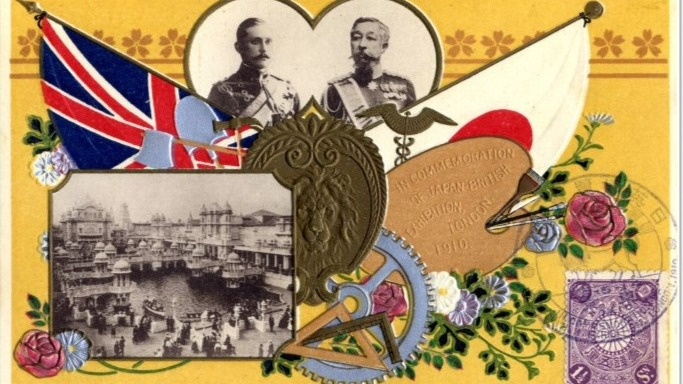
The UK and Japan have a surprising amount in common. Both are island nations that built empires and then outlived them. Both spilled massive amounts of tabloid ink over a royal marrying a commoner and walking away. And both kept the money flowing long after the empire was gone: London hosts the world’s largest FX hub, with 38% of global turnover, while Japan holds third place globally both for most traded currency and largest financial asset base.
This summer, a mere fifteen days apart, both countries finished rewriting their crypto rules. The UK drafted fresh rules, while Japan reused a 1948 statute. Yet for both, the reality is less ambitious than the headlines.
On June 30, 2026, the UK’s Financial Conduct Authority (FCA) published its brand-spanking, shiny new purpose-built crypto regime: new categories for trading platforms, intermediaries, custodians, stablecoins, and staking, each with its own capital rules and custody protections. Firms can apply from September 30 of this year and must be authorized by October of next year.
But under the hood, the FCA only wrote new rules where it had to. Wherever crypto risk looked like familiar risk, it copied its own capital-markets homework; the capital rules follow the same outline as the UK’s investment-firm regime, right down to an identical 0.04% charge on assets under custody.
Crypto’s structural quirks did force some new standards. Many tokens have no issuer, so disclosure duties land on exchanges instead. Trading is scattered across venues, so the exchanges themselves become the market-abuse police: in equities, suspicious transaction reports go to the regulator, but in crypto they go to the platform. If your crypto custodian fails, don’t call the Financial Services Compensation Scheme. Crypto clients get none of the backstop that protects a British stock investor.
Japan, meanwhile, skipped the drafting entirely. On July 15, Japan’s parliament passed amendments that move crypto from the Payment Services Act into the Financial Instruments and Exchange Act (FIEA), the statute that has governed Japanese securities since 1948. Rather than building crypto a new house, Japan invited it into the existing one. The move does its work through what FIEA already contains: crypto gains will be taxed at a flat 20% like stocks, down from rates that reached 55%, with the new rate expected in 2028. ETFs become possible, with local coverage expecting them in 2027 or 2028.
Those who remember the era of big hair and shoulder pads will wonder: is this a new Big Bang?
On October 27, 1986, Margaret Thatcher’s government deregulated the London Stock Exchange in a single day. Fixed commissions went, foreign ownership arrived, and open outcry gave way to electronic trading. The “Big Bang” was a bid to win back the flow London had lost since the dollar displaced sterling as the world’s reserve currency in the 1920s, and it worked smashingly well. Within two decades Canary Wharf rivaled Wall Street for dominance as a financial center, and it is said that the Big Bang created 1,500 new millionaires in London.
Tokyo paid attention and soon copied the playbook. In November 1996, Prime Minister Ryutaro Hashimoto announced a Japanese Big Bang, borrowing the name outright and attaching the slogan “free, fair, global.”
The obvious reading of 2026 is a third act: two aging financial centers using crypto to claw back relevance. The FCA’s press release billed its changes as cementing “the UK’s place as a global hub.” But I don’t think that is what is happening.
The Big Bangs were a deregulation play to be competitive on the world stage. These regimes are the reverse, with details that show both regulators currently favor stability over innovation. The UK requires retail orders to execute on UK-authorized venues and offers overseas exchanges no equivalence route, so a global platform cannot passport in. Japan caps retail crypto leverage at 2x, a number that would embarrass any offshore perp desk.
At the WebX conference this past week, a general manager of a Japanese exchange told me he can list at most four new tokens a year. In both countries, a token needs a disclosure document, a mini prospectus, before it can trade. This is not quite how a country behaves when it wants to host the world’s order flow.
The latest data from JVCEA show Japan’s licensed exchanges trading ¥22.9B ($141M) a day in spot markets. Meanwhile, a 2025 web-traffic study put total Japanese crypto activity, offshore venues and DEXs included, over $1B a day. The reclassification is less an invitation to the world than an attempt to bring Japan’s own citizens’ trading back onshore, where it can be seen, protected, and taxed.
Forty years ago, London and Tokyo fought for the world’s flow. My read is that in 2026 they’re fighting to keep their own. Both regulators seem to have concluded that the contest to host crypto’s global center will be settled elsewhere, so they have set themselves a smaller goal: make the asset class safe for their own savers and institutions.
The smaller ambition may ultimately prove to be the wiser one. Nigel Lawson, the mastermind behind the Big Bang, admitted later that its unintended consequence was the 2008 crisis: deregulation let investment banks merge with high street banks, grow too big to fail, and then fail anyways. Making crypto safe for your own savers won’t make you a global crypto hub, but neither will it blow holes in anyone’s balance sheet.

