Want to skip ahead and read the full report? Read it here.
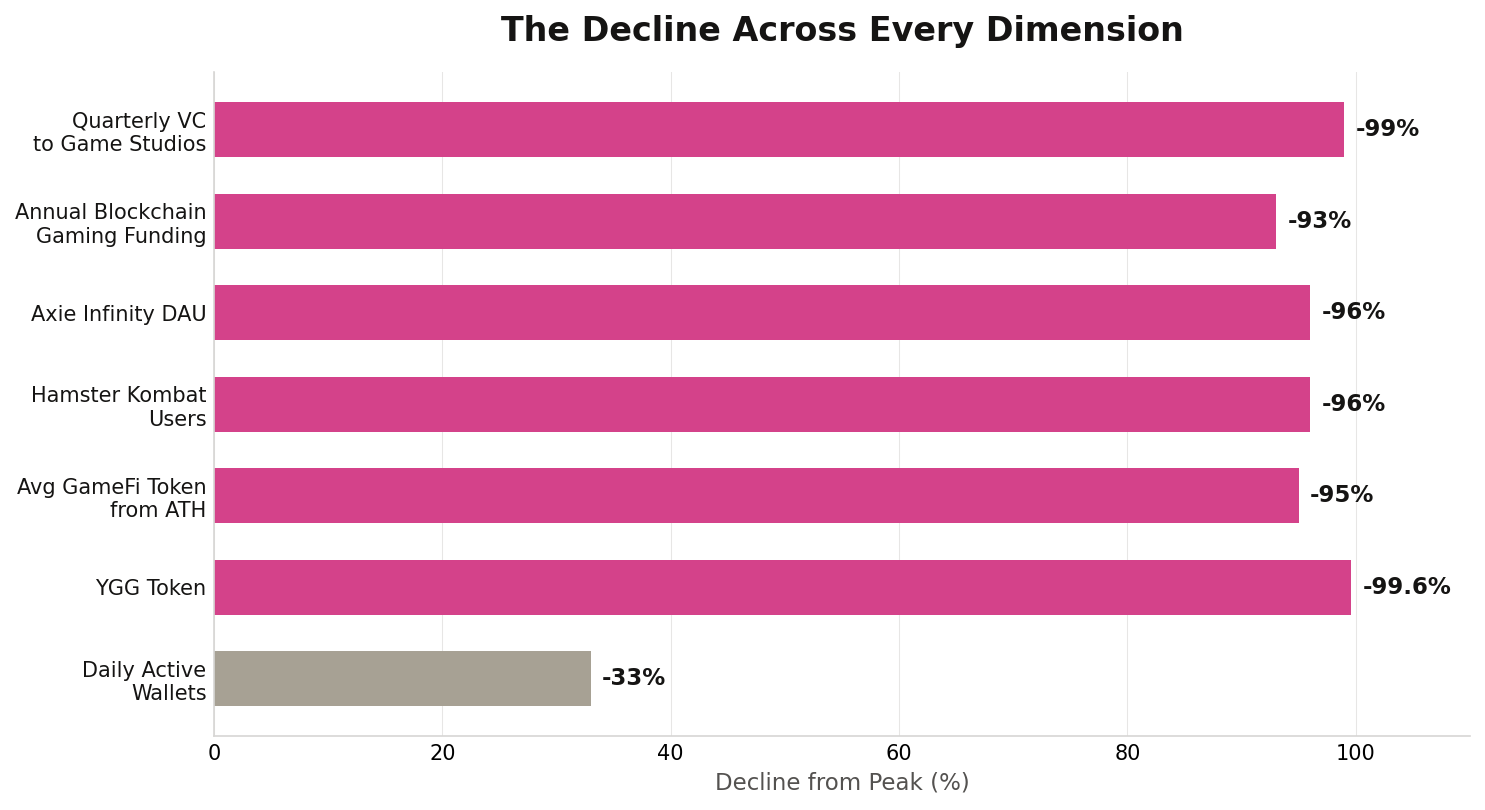
Between 2020 and early 2026, an estimated $12 billion to $15 billion in venture capital, token sales, and NFT proceeds flowed into blockchain gaming. A ChainPlay analysis of more than 3,200 GameFi projects found that 93% are effectively dead. The average token has declined 95% from its peak. Of the venture firms that invested in the sector, 58% have realized losses between 2.5% and 99%.
This report examines how the capital was deployed, why the failures were structural rather than cyclical, and what the surviving projects share in common.
Where $12 Billion Went
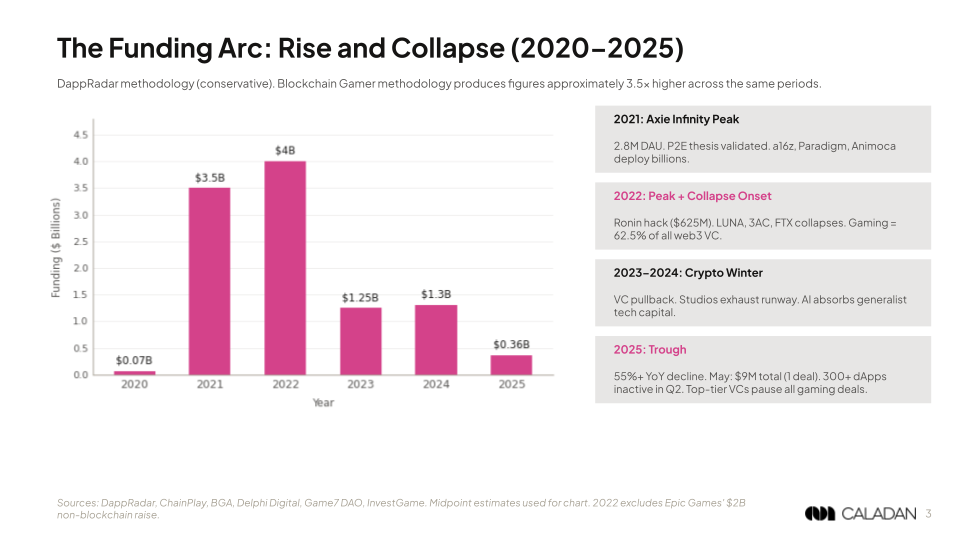
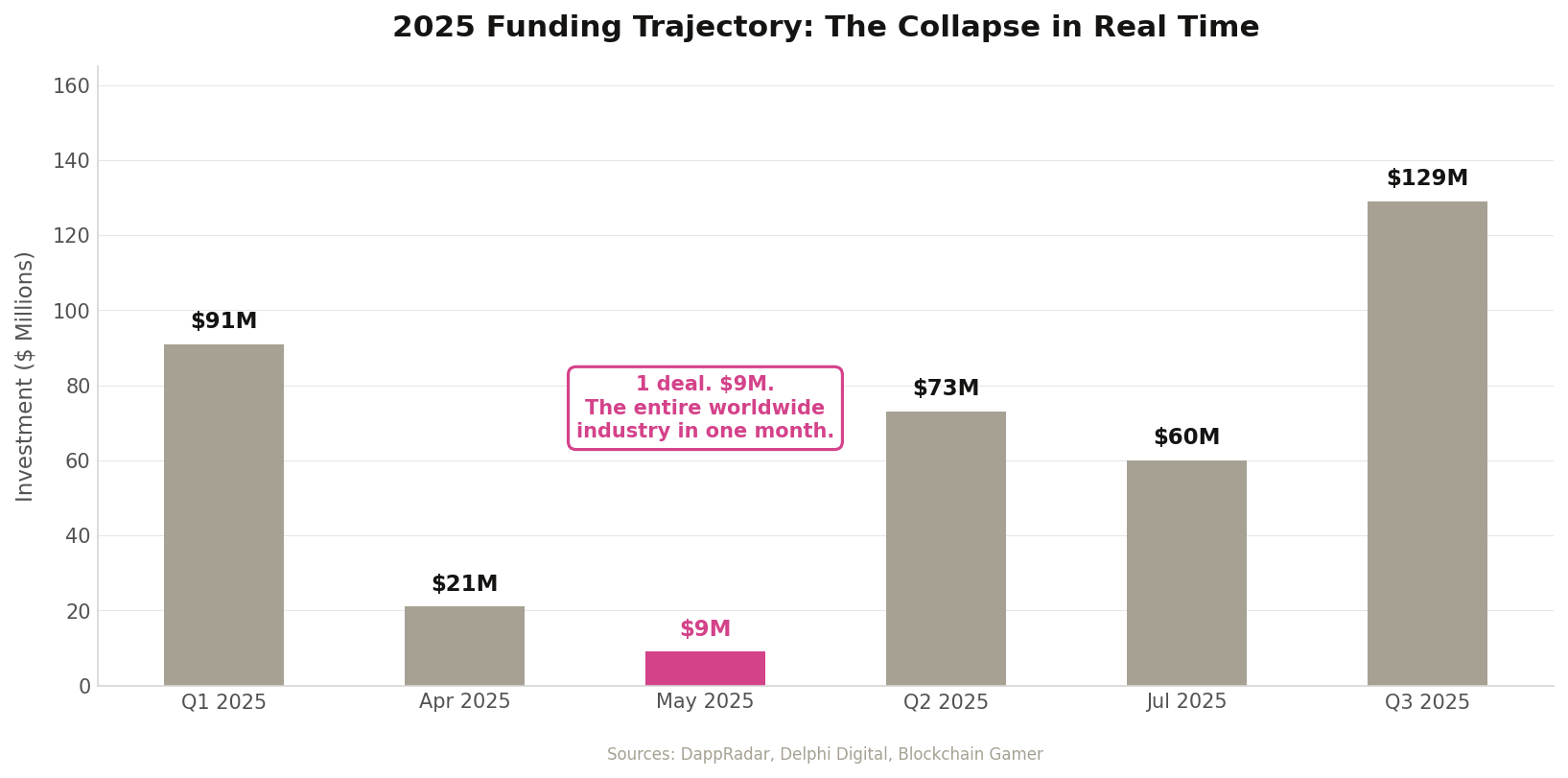
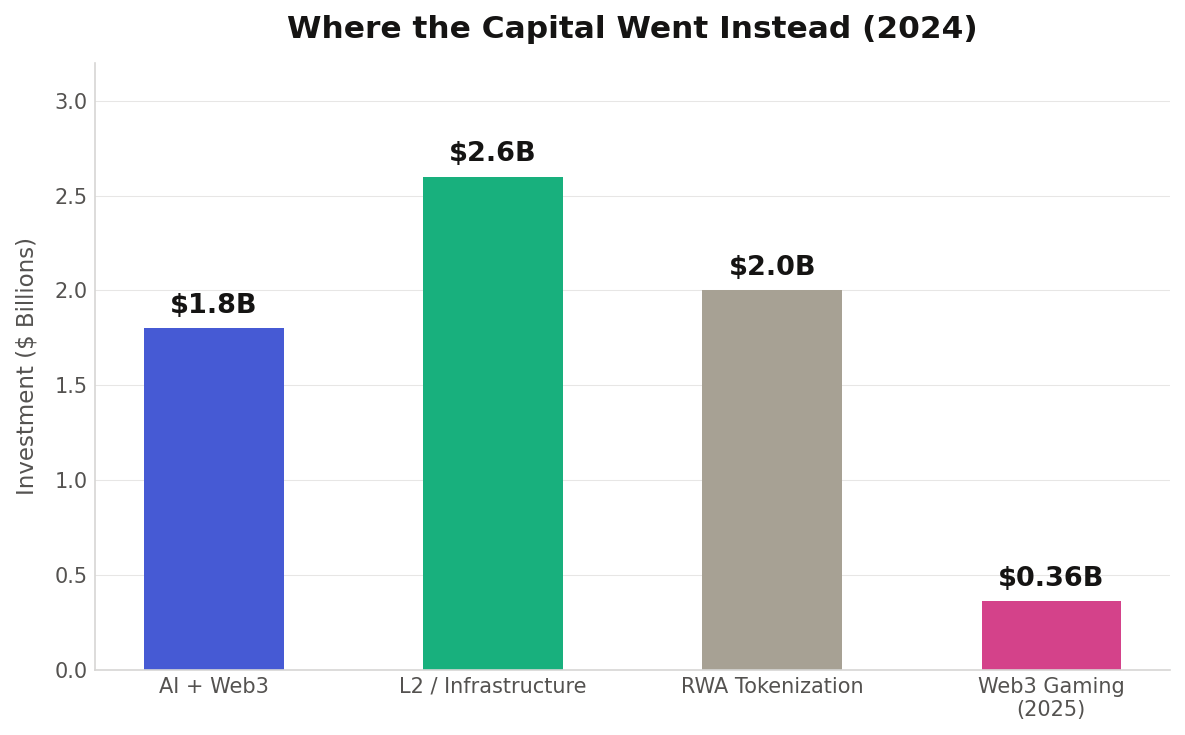
The funding arc tells the story. From $70 million in 2020 to a $4 billion peak in 2022, then a collapse to roughly $360 million in 2025. In May 2025, a single deal worth $9 million represented the entire month's global web3 gaming investment. By 2025, gaming's share of web3 venture capital had fallen from 62.5% to single digits, as AI, real-world asset tokenization, and L2 infrastructure absorbed the displaced capital.
Five Failure Mechanisms
The 93% failure rate was not simply a market cycle casualty. It reflected structural defects in how web3 gaming studios were capitalized. Five distinct patterns emerged:
- Pre-product capitalization. Tokens and NFTs sold before playable builds existed. Pixelmon raised $70 million from an NFT mint in February 2022. Over four years later, no public game has shipped.
- Metaverse vaporware. Photorealistic metaverse promises backed by demo reels. The Sandbox raised $93 million from SoftBank. It has never sustained more than roughly 4,500 daily on-chain users.
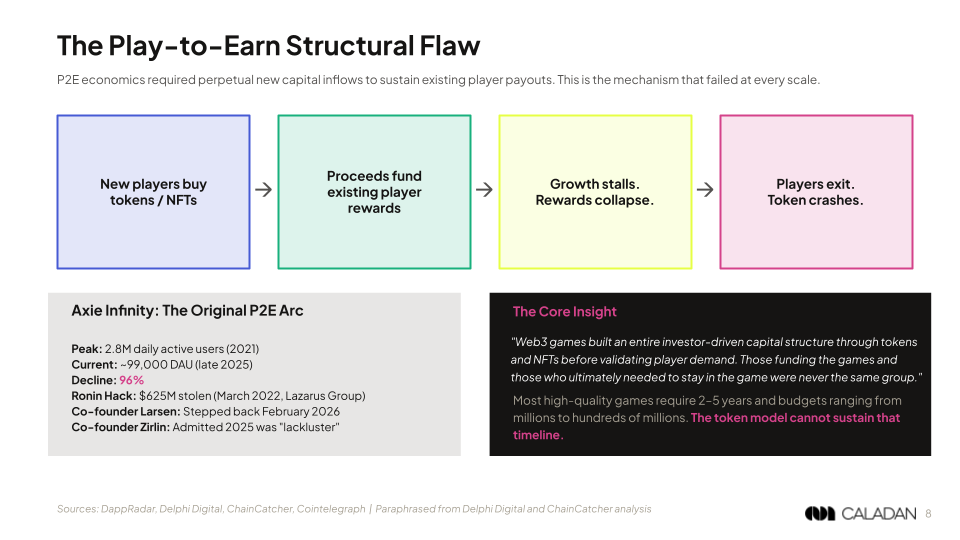
- Unsustainable tokenomics. Play-to-earn economics required perpetual new capital inflows. Axie Infinity peaked at 2.8 million daily users and collapsed to 99,000.
- Corporate governance failure. Gala Games raised $200 million. Co-founders are suing each other over alleged theft of $130 million in tokens.
- Perpetual development. Star Atlas, Shrapnel, and Illuvium have collectively absorbed over $70 million and remain unfinished after 4+ years each.
The Other Layers of Capital Destruction
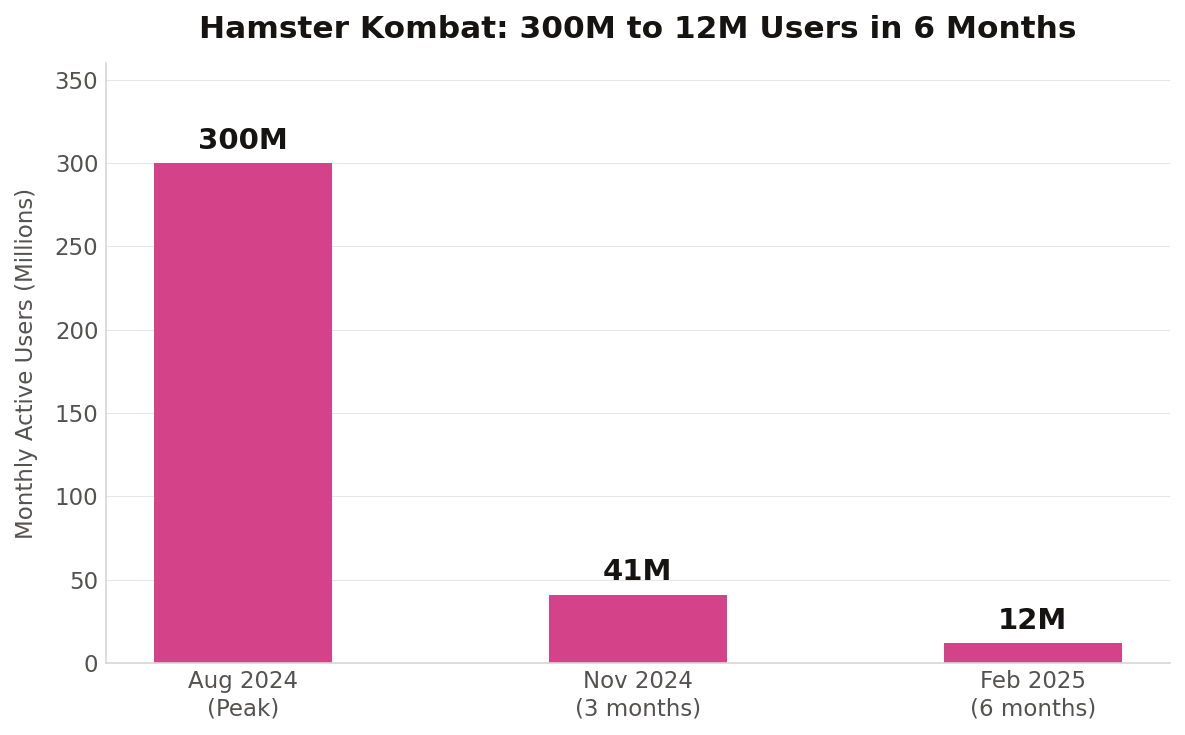
The studio failures were only one layer. The guild ecosystem (YGG down 99.6% from its all-time high), the Telegram tap-to-earn wave (300 million Hamster Kombat users reduced to 12 million in six months), and corporate governance failures compounded the damage across different investor constituencies.
What Survived
The survivors share identifiable characteristics: they built games first and integrated blockchain second, treated tokenomics as a supporting mechanism, and targeted mainstream gaming audiences.
Off the Grid (Gunzilla Games, $100M+ raised) became the first major web3 game on Steam. Cambria processed over $150 million in PvP wagers with 4,500 concurrent players. Several "web2.5" studios are generating revenue by treating blockchain as invisible infrastructure.
None has achieved mainstream scale. Daily active wallets across web3 gaming fell from over 7 million in January 2025 to 4.66 million by Q3, a 33% decline in nine months.
Five Variables to Watch
- Whether the game-first model proves financially sustainable (Off the Grid cannot pay its employees despite $100M in funding)
- Institutional publisher entry (no major publisher has committed a flagship franchise)
- The Animoca Brands Nasdaq IPO ($5B to $10B target valuation)
- Web2.5 trajectory and stablecoin adoption in gaming
- Whether the early 2026 token rally is sustained by operational improvements or collapses on the next downturn
The full report, including detailed case studies on Pixelmon, Wilder World, Ember Sword, Off the Grid, and the complete 2025 to 2026 shutdown timeline, is available below.